Oct 8, 2026Packaging Guides
Custom Non-Woven Bags for Clothing Stores: How to Choose the Right Quality
Choosing non-woven bags for your clothing store? Compare materials, handles and printing, and learn how to select the right size and quality for your garments and brand.
Custom Non-Woven Bags for Clothing Stores: How to Choose the Right Quality
A shopping bag is part of the purchase your customer takes home. For a clothing store, it should hold garments comfortably, feel secure to carry and present the brand clearly.
But why do custom non-woven bags differ so much in texture and quality? Some feel soft and flexible, while others have a smoother surface and a more structured shape. Two bags that look similar in photos may feel quite different in your hands.
Non-woven bag quality depends on the fabric, surface finish, bag construction, handle attachment and printing. Fabric weight matters, but it does not tell the whole story.
This guide explains how clothing stores, boutiques and fashion brands can compare these details and choose suitable shopping bags before placing an order.
What Are Custom Non-Woven Shopping Bags?
Non-woven shopping bags are made from fibres bonded together rather than woven into cloth. Many retail versions use polypropylene, also known as PP.
These bags can be customised with different dimensions, colours, handles and printed designs. Their appearance ranges from a soft, textured fabric finish to a smoother laminated surface.
Some also have a kraft-paper look. A beige bag may resemble paper while actually being made from non-woven fabric. Always confirm the material specification rather than identifying it from its appearance alone.
For clothing stores, the main question is practical: does the finished bag suit the garments, the customer’s purchase and the way the store wants to present its brand?
Unlaminated vs Laminated Non-Woven Bags
Unlaminated and laminated non-woven bags are two common options. They offer different finishes, but neither is automatically the best choice for every store.
Feature | Unlaminated Non-Woven Bags | Laminated Non-Woven Bags |
|---|---|---|
Surface | Visible fabric texture | Fabric covered with a film layer |
Feel | Often soft and flexible | Often smoother and more structured |
Printing | Commonly used for simple logos and text | Commonly used for detailed, full-colour graphics |
Cleaning | Textured surface can be harder to wipe clean | Surface is generally easier to wipe clean |
Water resistance | Depends on the material and construction | Film provides a water-resistant surface; seams and openings still matter |
Cost considerations | Often economical for straightforward designs | Film, printing and additional processing can increase cost |
Unlaminated Bags for Everyday Clothing Purchases
An unlaminated non-woven bag can suit stores that want simple branding and a soft fabric appearance.
For example, a shop selling T-shirts, shirts or lightweight tops might choose a plain-colour bag with a contrasting logo. The colour combination, handle style and logo placement can create a distinctive presentation without a complicated printed design.
Laminated Bags for Detailed Artwork
A laminated non-woven bag can suit stores that want a smoother finish or detailed graphics covering a large part of the bag.
It may be appropriate for fashion illustrations, seasonal artwork or full-colour branding. However, the surface finish does not guarantee carrying strength. Handles, joints and the bottom construction still need to suit the intended contents.
Choose the Bag Size Around Your Garments
The right bag size starts with your typical purchase—not simply the smallest or cheapest size available.
Measure your garments as they will be packed, including tissue paper, inner bags or gift boxes. Allow enough room for staff to pack the purchase easily and for customers to remove it comfortably.
T-Shirts, Shirts and Lightweight Tops
A compact bag can give a single folded garment a neat presentation.
Check the opening width and internal space. The garment should fit without being forced into the bag or becoming excessively compressed.
Knitwear, Hoodies and Multiple Items
Bulkier purchases need more room, particularly at the bottom and opening.
A bag with suitable depth can accommodate folded knitwear or several garments more comfortably. Check the handle attachment and bottom construction with the actual combination you expect customers to carry.
Jackets and Coats
Outerwear can take up considerable space even when it is relatively light.
Test a sample with a folded jacket or coat. Make sure the bag closes around the garment comfortably and that the handles remain easy to hold when the bag is filled.
Accessories and Gift Boxes
Scarves, small accessories and boxed gifts may need a smaller bag.
If you use gift boxes, base the bag dimensions on the outside measurements of the box. A suitable fit helps keep the presentation tidy and makes the purchase easier to carry.
For stores selling a wide range of garments, two or three useful bag sizes may work better than one large bag for every purchase.
Why Fabric Weight Alone Cannot Prove Quality
Fabric weight is commonly expressed in gsm, meaning grams per square metre.
Gsm helps describe the material, but it is not a complete measure of durability or carrying capacity. A finished bag’s performance also depends on:
- Fabric quality and consistency
- Bag dimensions and shape
- Sewn or bonded construction
- Handle attachment
- Bottom and side joints
- The weight and shape of the contents
For laminated bags, ask whether the stated gsm refers to the base fabric or the total laminated material. Otherwise, two quotations may describe different measurements.
Rather than choosing by gsm alone, explain what the bag will carry and ask for an appropriate specification. Then check a finished sample with those items inside.
Check the Handles, Bottom and Bag Shape
A shopping bag should be convenient for staff to pack and comfortable for customers to carry. These construction details deserve as much attention as its colour and logo.
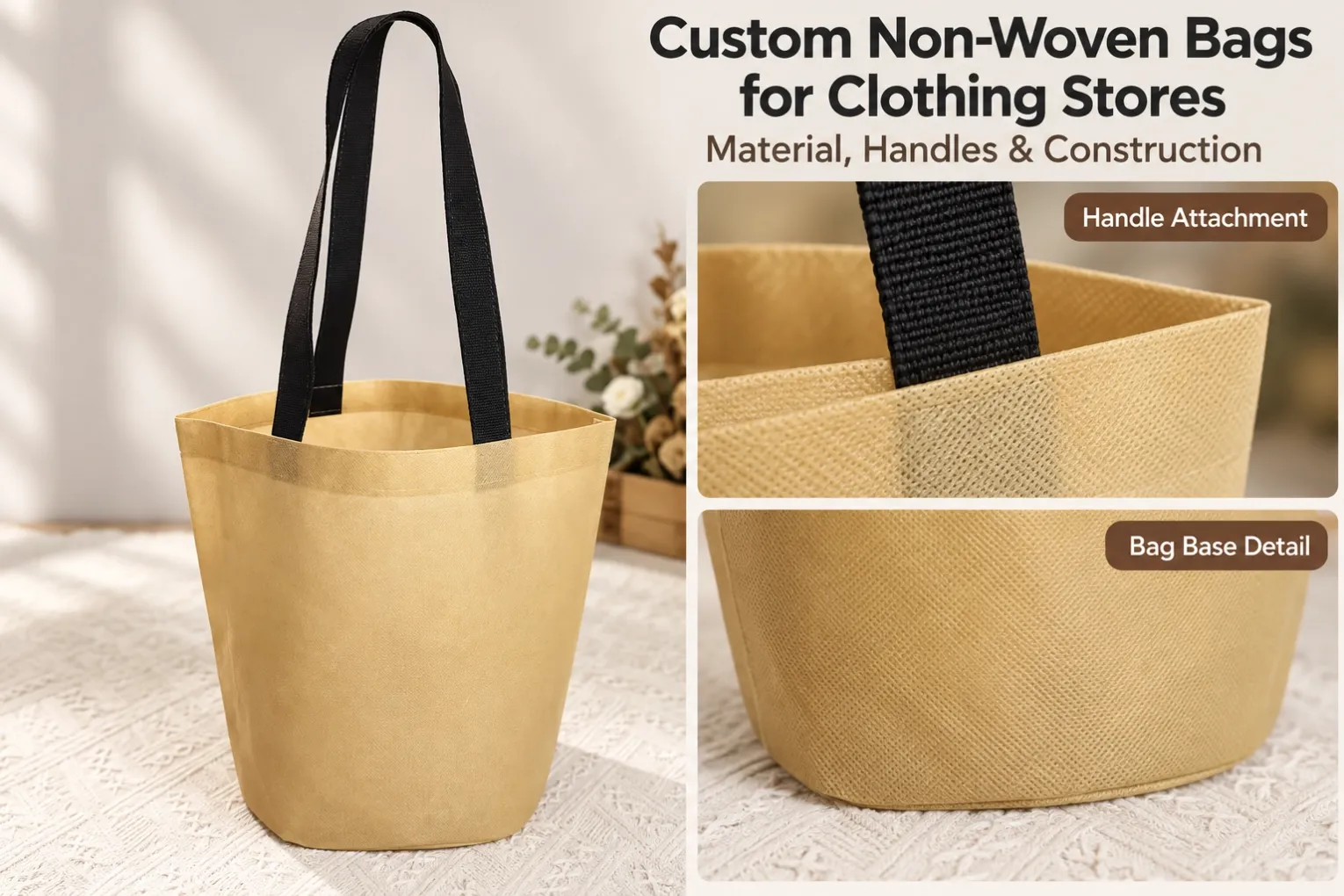
Handle Attachment
Inspect the points where the handles join the bag body.
Look for consistent workmanship and secure attachment. Ask the supplier how the proposed construction supports your intended use, particularly if customers often purchase several items.
Handle Length
Decide whether the bag is intended mainly for carrying by hand or over the shoulder.
Check this with the bag filled. Bulky clothing can reduce the available space beneath the handles and affect carrying comfort.
Bottom and Side Joints
Inspect the lower corners, bottom edge and side joints.
Look for gaps, loose threads, uneven joins or areas that separate when the bag is packed. The construction should be appropriate for the garments and purchase combinations you expect it to hold.
Bag Shape
A wider bottom or bucket-style shape can provide room for bulky purchases. A flatter bag may suit lightweight garments and simpler packing needs.
A kraft-look beige non-woven bag with contrasting black handles is one option for boutiques that prefer a warm, understated appearance. Confirm the dimensions and construction before deciding whether that style suits your products.
Judge the bag when it is filled, as well as when it is empty. This reveals how it carries, how it holds its shape and whether the logo remains visible.
Choose Printing That Works with Your Design
The printing method should suit the material, artwork, quantity and required finish.
Screen printing is commonly used for simple logos and text on unlaminated non-woven bags. Printed-film lamination is a common option for detailed, full-colour designs.
Before production, ask the supplier to review:
- Small lettering and fine lines
- Large areas of solid colour
- Required colours
- Printing close to edges and seams
- Logo position on the finished bag
For a clothing boutique, a clear logo on a carefully chosen bag colour can be effective. A larger print is not always necessary.
Where possible, check a physical printed sample. Fabric texture and the bag’s shape can change how the artwork appears compared with a flat digital proof.
Common Ordering Mistakes to Avoid
Comparing Prices Without Matching Specifications
A price comparison is only useful when the quotations cover comparable materials, sizes, handles, construction, printing and quantities.
A lower price may reflect a smaller bag, lighter material or simpler construction. Confirm what is included before making a decision.
Choosing Appearance Before Fit
An attractive finish cannot compensate for a bag that is difficult to pack.
Start with the garments and required size, then choose the colour, surface finish and artwork.
Assuming Lamination Means Complete Waterproofing
Lamination can provide a water-resistant surface, but water may still enter through seams or openings.
Avoid describing the entire bag as fully waterproof unless that performance has been specifically verified.
Approving Only a Digital Mockup
A mockup helps you check the design layout. It does not show fabric feel, handle comfort or carrying performance.
A physical sample is more useful for confirming those details before a bulk order.
How to Check a Non-Woven Bag Sample
Test the sample in the same way your staff and customers will use it.
- Pack your most common garment purchase.
- Check the opening, depth and available space.
- Lift and carry the bag using the intended handles.
- Inspect the handle attachments, sides and bottom after carrying.
- Check the logo with the bag filled and held naturally.
Also test the bulkier combinations you regularly sell. If you need a particular carrying capacity, agree on the requirement and testing method with the supplier before production.
Frequently Asked Questions
What Is the Best Non-Woven Bag for a Clothing Store?
The best option depends on your garments, typical purchase size, artwork and budget. Unlaminated bags can suit everyday purchases and simple logos. Laminated bags can suit detailed graphics and a smoother finish. Both require suitable dimensions and secure construction.
Does Higher Gsm Mean a Stronger Bag?
Higher gsm means more material weight per square metre, but it does not guarantee a stronger finished bag. Fabric quality, handle attachment, joints and dimensions also affect performance.
Are Non-Woven Bags Suitable for Jackets and Coats?
They can be, provided the bag has enough space and suitable construction. Check a sample with your actual outerwear rather than relying only on a size chart or an empty-bag photo.
Can Non-Woven Bags Look Like Kraft Paper?
Yes. Some non-woven bags have a kraft-paper appearance. Confirm the actual material and surface finish with the supplier, because a paper-like appearance does not mean the bag is made from paper.
Can We Print Our Clothing Brand’s Logo on the Bags?
Yes. The suitable printing method depends on the bag material, artwork and order quantity. Share your logo file and preferred effect so the supplier can recommend an appropriate method.
What Information Should We Provide for a Quotation?
Provide the intended contents, preferred dimensions, order quantity, logo or artwork, handle preference and delivery destination. If you are unsure about size, share the measurements of your folded garments or gift boxes.
Custom Non-Woven Bags from YTS Packaging
YTS Packaging helps clothing stores, boutiques and fashion brands select custom non-woven shopping bags around their products, presentation needs and budget.
We can help review material options, dimensions, handle styles and logo printing. If you prefer a warm, paper-like appearance, explore our kraft-look beige non-woven shopping bag as a starting point.
Planning bags for your clothing store? Send us the size of your typical packed garments, your estimated quantity and your logo. We can help you compare suitable options and prepare a quotation.