How-to & Branding
Brand-Focused vs. Product-Focused Packaging: Which Is Right for Your Business?
Should your packaging highlight your brand or your product? Learn how to balance brand identity, clear product information, and practical design for your business.
Brand-Focused vs. Product-Focused Packaging: What Should Your Design Highlight?
When planning custom packaging, it is easy to start with colors, materials, and logo placement. Before choosing those details, consider one question:
What should customers notice first—your brand or your product?
Some packaging gives the brand a leading role. Other packaging puts product information first. These are two ways to prioritize your design, and most businesses need a balance of both.
The right approach depends on where customers see your packaging, what they already know about your business, and what they need to understand before buying.
What Is Brand-Focused Packaging?
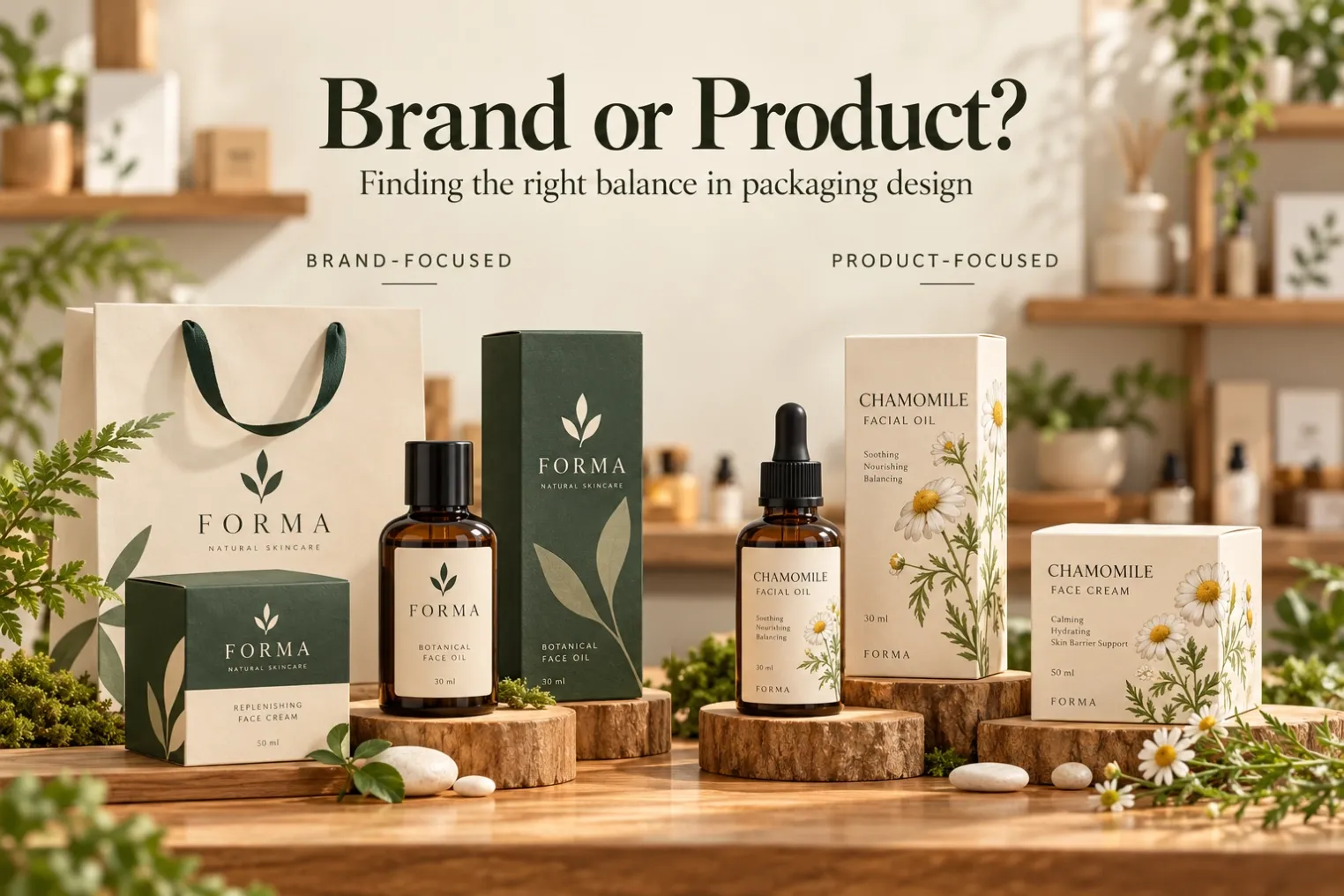
Brand-focused packaging emphasizes the elements that make your business recognizable: your name, logo, colors, typography, and distinctive graphics.
The aim is to create a consistent identity that customers can recognize across different products and packaging formats.
For example, a café might use the same colors and illustrations on its takeaway cups, paper bags, and pastry boxes. Each item serves a different purpose, but they all feel like part of the same business.
This does not require elaborate printing or expensive finishes. A clearly placed logo, thoughtful spacing, and consistent use of color can help create a recognizable appearance.
Brand-focused design is especially useful when the purchase has already happened. A takeaway bag carried down the street or a gift box passed to a friend gives your brand another opportunity to be seen.
What Is Product-Focused Packaging?
Product-focused packaging helps customers quickly understand what is inside and why it may suit their needs.
It typically gives more prominence to:
- Product name and category
- Flavor, scent, or variety
- Size, quantity, or weight
- Relevant ingredients or product features
- Product photography or a clear window
Imagine a customer choosing between several bags of cookies on a shop shelf. If an unfamiliar brand displays only a large logo, the customer may need to search for the flavor and product details.
A clear description such as “Dark Chocolate Cookies,” supported by an easy-to-find pack size, gives that customer useful information at a glance.
Product visibility can also come from the packaging structure. A window bakery box, for example, lets customers see the pastries inside while leaving space for branding and product details.
Which Approach Is Right for Your Business?
Your stage of growth matters, but it should not be the only factor. The buying environment is just as important.
For Products Sold on Retail Shelves
Customers may encounter your product without knowing anything about your business.
Make the product category, variety, and relevant details easy to find. Your brand should still be visible, but customers should not have to guess what you are selling.
For Café and Bakery Takeaway Packaging
Customers often choose their food or drink before receiving the packaging.
This gives you more freedom to emphasize your brand on cups, bags, and boxes. Practical details still matter, including how the packaging carries, closes, and protects the contents.
For E-Commerce Orders
Shipping packaging needs to protect the product and support a convenient packing process.
Brand colors, printed messages, or coordinated wrapping can make the experience feel consistent with your online store. The structure and fit should work just as carefully as the appearance.
For Gifts and Boutique Retail
Materials, proportions, and opening details can help communicate the intended experience.
Consider how the packaging feels when someone carries, gives, or opens it. Keep your brand recognizable while choosing a structure that suits the product and occasion.
New Brands Need Both Clarity and Recognition
It can be tempting to assume that new businesses should focus on products while established businesses should focus on branding.
In practice, both need clear product communication and a recognizable identity.
A new brand benefits from making its products easy to understand, but it also needs consistent visual elements that customers can remember. An established brand launching a new product category may need to explain that product just as clearly.
A useful goal is to help customers understand what you sell and remember who you are.
How to Balance Both in Small-Batch Custom Packaging
You do not need to put every message on the front of your packaging. Start by deciding which information deserves the most attention.
1. Build a Consistent Brand Foundation
Keep your logo, main colors, and typography consistent across your packaging.
This gives you a framework you can extend as you add products or introduce new sizes.
2. Leave Clear Space for Product Information
Give the product name, variety, and size a defined place in the layout.
A consistent information area makes it easier to distinguish products without redesigning the entire package.
3. Choose a Structure That Supports the Product
A clear window may suit visually appealing baked goods. An insert may help hold a delicate item in place. A suitable bag size can make a takeaway order easier to carry.
Choose these features around the product and its use.
4. Consider Labels, Stickers, or Sleeves for Variations
If you offer several products, a shared base package with different labels or sleeves may be worth considering.
A bakery could use one branded paper bag with labels for different bread varieties. A retail business could use a consistent box design and change the label for each product.
Compare the full cost—including printing, application time, and order quantities—before deciding whether this approach suits your business.
Three Questions to Ask Before Starting Your Design
Before choosing materials and print finishes, ask:
- What does the customer need to understand immediately?Identify the information that helps them recognize or choose the product.
- What should stay consistent across the range?Decide which brand elements will connect your bags, boxes, cups, or labels.
- What does the packaging need to do?Consider protection, display, carrying, storage, and delivery.
These answers create a clearer brief for both the artwork and the packaging specifications.
Plan Packaging Around Your Product and Your Brand
Effective packaging gives customers the right information at the right moment. It helps them understand the product, recognize the brand, and use the packaging comfortably.
At YTS Packaging, we help growing businesses explore custom bags, boxes, cups, and other packaging options, with practical support on materials, structures, and printing.
Planning your packaging? Tell us about your project. Share your product type, packaging size, estimated quantity, and design ideas so we can recommend suitable options.