Aug 1, 2026Packaging Guides
What Paper Bag GSM Should I Choose? A Practical Guide to Paper Weight
Learn how to choose the right GSM for custom paper bags. Compare 120gsm, 150gsm, 180gsm, 200gsm, 250gsm and 300gsm paper for retail, bakery, takeaway and luxury packaging.
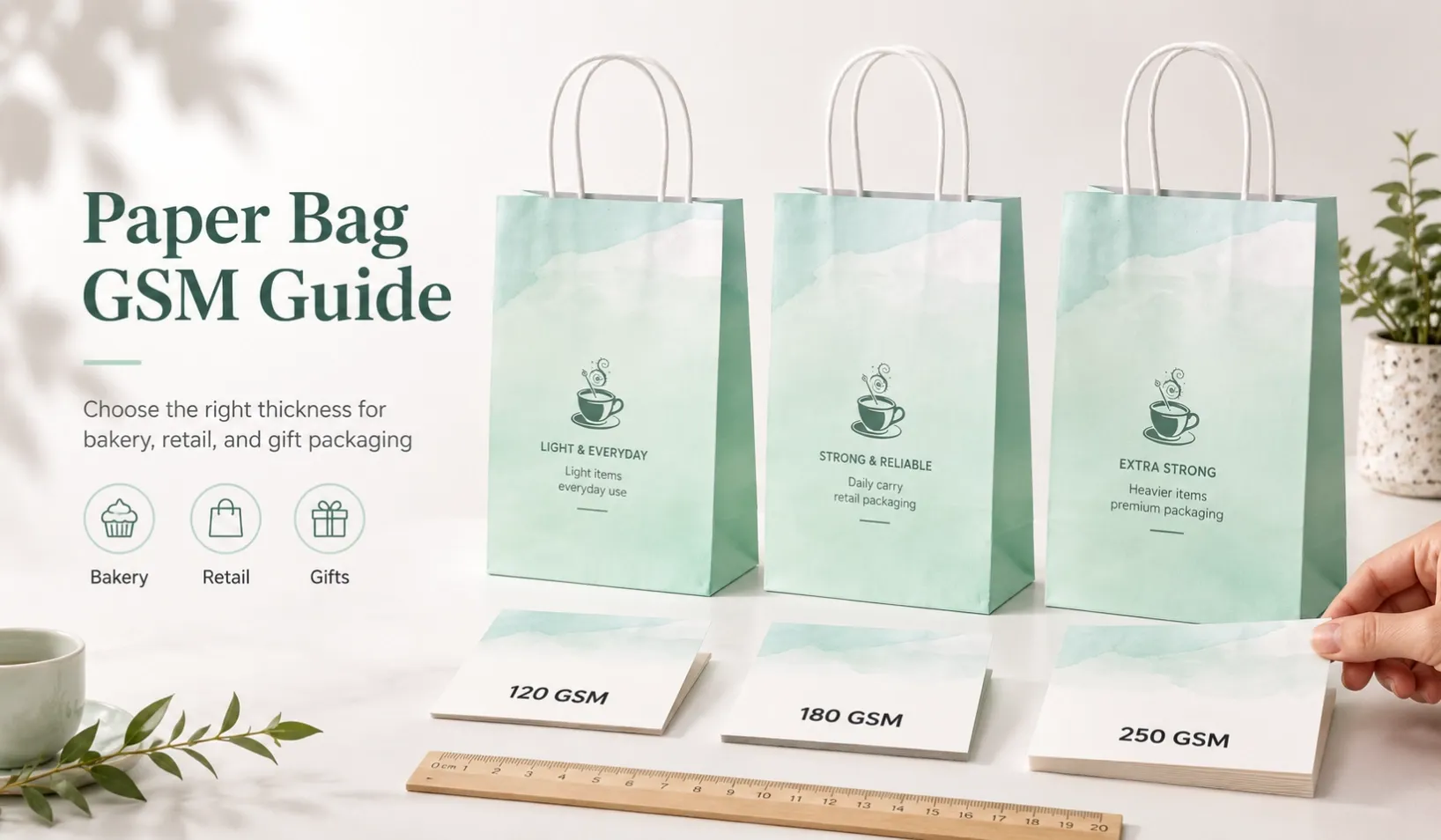
What Does GSM Mean for Paper Bags?
When choosing a custom paper bag, one of the most important specifications is GSM (grams per square meter).
GSM measures the weight of paper per square meter. In general, a higher GSM means thicker, stronger paper with better rigidity, while a lower GSM is lighter, more flexible, and often more economical.
Choosing the right GSM helps balance strength, appearance, and cost, ensuring your packaging protects the product while presenting your brand professionally.
Why Does GSM Matter?
A paper bag has two essential functions:
• Protect the product during transportation and handling.
• Promote your brand through attractive, high-quality packaging.
If the paper is too thin, the bag may wrinkle or tear under load. If it is unnecessarily thick, production and shipping costs increase without adding real value.
The ideal GSM depends on the product weight, bag size, handle type, and printing finish.
Recommended Paper GSM for Different Products
Paper Weight
Recommended Use
120gsm
Lightweight items such as pastries, snacks, gifts, brochures, and promotional materials
150gsm
Bakery bags, coffee shops, takeaway packaging, cosmetics, and small retail products
180gsm
Fashion stores, clothing, gifts, medium-weight retail items
200gsm
Shopping bags requiring extra strength and premium appearance
250gsm
Luxury retail bags, wine bottles, premium gift packaging
300gsm
Heavy-duty luxury packaging and high-end presentation bags
How Product Weight Affects GSM Selection
As a general guideline:
• Products under 1 kg usually work well with 120–150gsm paper.
• Products weighing 1–3 kg typically require 180–200gsm paper.
• Products above 3 kg often need 250gsm or higher, depending on the bag size and handle construction.
Large paper bags also require thicker paper than small bags because larger panels need greater rigidity to prevent deformation.
Printing and Finishing Also Matter
Paper weight is only one part of the decision. Printing and finishing processes also influence the recommended GSM.
For example:
• Hot foil stamping often looks better on 200gsm+ paper.
• Embossing and debossing produce cleaner results on thicker paper.
• Matte or gloss lamination improves durability and premium appearance.
• Cotton rope or ribbon handles are usually paired with 200gsm–300gsm paper.
When selecting paper, consider the complete packaging design rather than GSM alone.
Our Recommendation
For most custom paper bags, we recommend the following:
• 120–150gsm Kraft Paper for everyday takeaway and food packaging.
• 200–250gsm White Card Paper for shopping bags and retail packaging.
• 250–300gsm Premium Paper for luxury brands and gift packaging.
If you are unsure which paper weight is suitable, share your product size, approximate weight, and intended use with us. We can recommend the most cost-effective solution for your project.
Conclusion
There is no single "best" GSM for every paper bag. The right choice depends on your product, branding, and budget.
By selecting an appropriate paper weight, you can achieve the ideal balance between durability, appearance, and production cost while creating packaging that leaves a lasting impression on your customers.