Boxes
How to Choose the Right Cake Box for Your Bakery
Learn how to choose a cake box by measuring the cake board and finished height, comparing box styles, and testing a sample before placing a custom order.
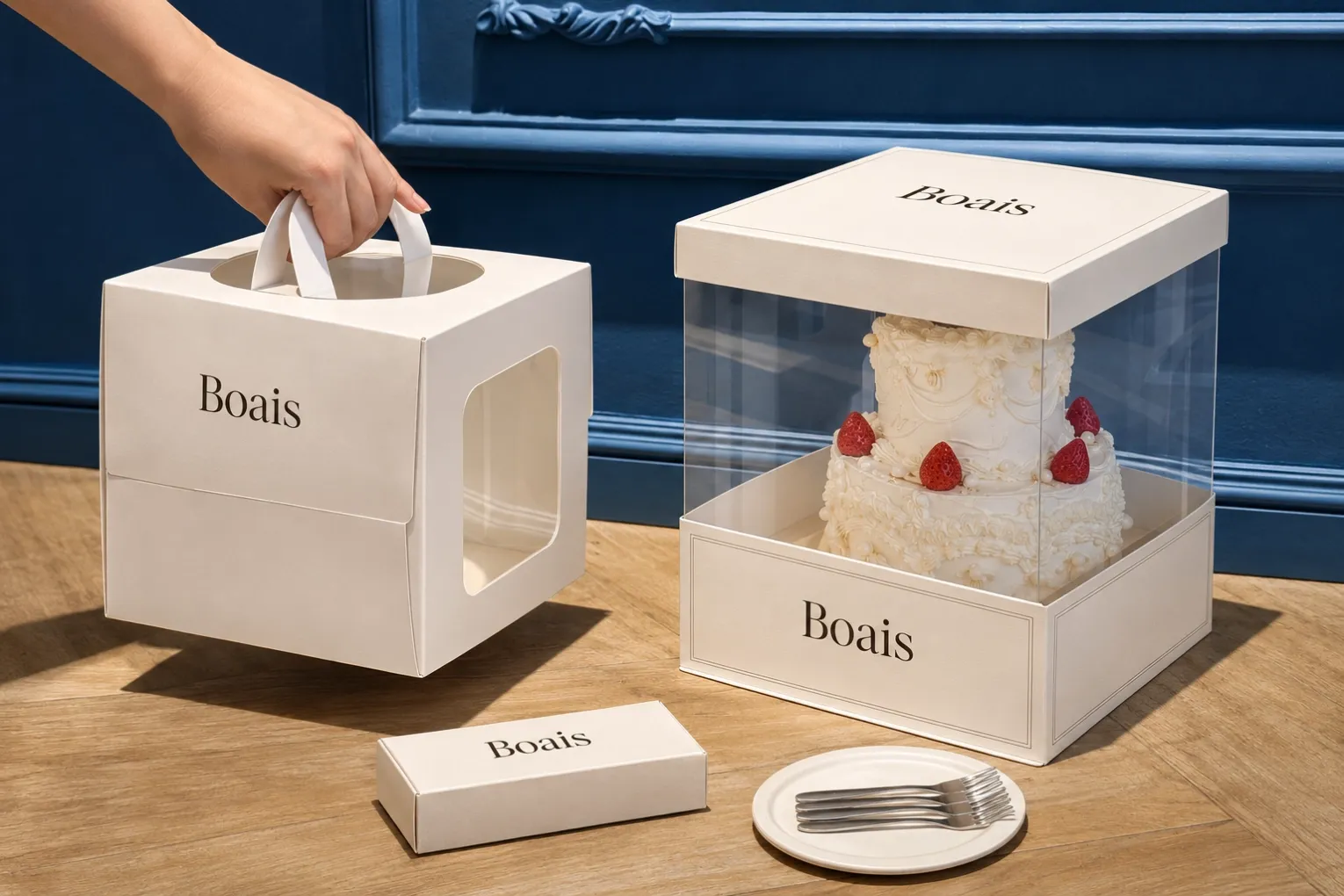
How to Choose the Right Cake Box for Your Bakery
Start with two measurements: the size of the cake board and the total height of the finished cake. A 6-inch cake may sit on an 8-inch board, and a topper can change the box height you need. Once you know those measurements, you can choose a box that fits the way you pack, display, and deliver your cakes.
1. Measure the board and the finished cake
For the length and width, measure the cake board at its widest points. If frosting or decorations extend beyond the board, include those in your measurements. Compare the result with the box’s usable inside dimensions and check that there’s enough room to slide the board in and lift it out.
For example, if your 6-inch cake sits on an 8-inch board, start by measuring that 8-inch board. Ask for the box’s actual inside dimensions before ordering, especially if the board and box have the same listed size. Too much space can also let the board slide during delivery.
For the height, measure from the underside of the board to the highest decoration. If the total height is 9 cm, an 11 cm internal height could be a starting point for a sample. Close the lid with the cake inside to check that it clears the frosting and topper. For tall layer cakes, a tall box with a front or side opening can make loading easier.
2. Choose the structure for pickup, delivery, or display
How you sell your cakes | Box style to consider | What to check |
|---|---|---|
Daily bakery pickup | Quick-assembly folding cake box | Can your team assemble it quickly and slide the cake in without touching the sides? |
Local delivery or heavy layer cakes | Reinforced cake box with a rigid cake board | Does the base stay flat under the full weight? Do the tabs stay closed during handling? |
Gifts and special occasions | Cake box with a reinforced carry handle | Can the handle and its attachment points support the packed cake? |
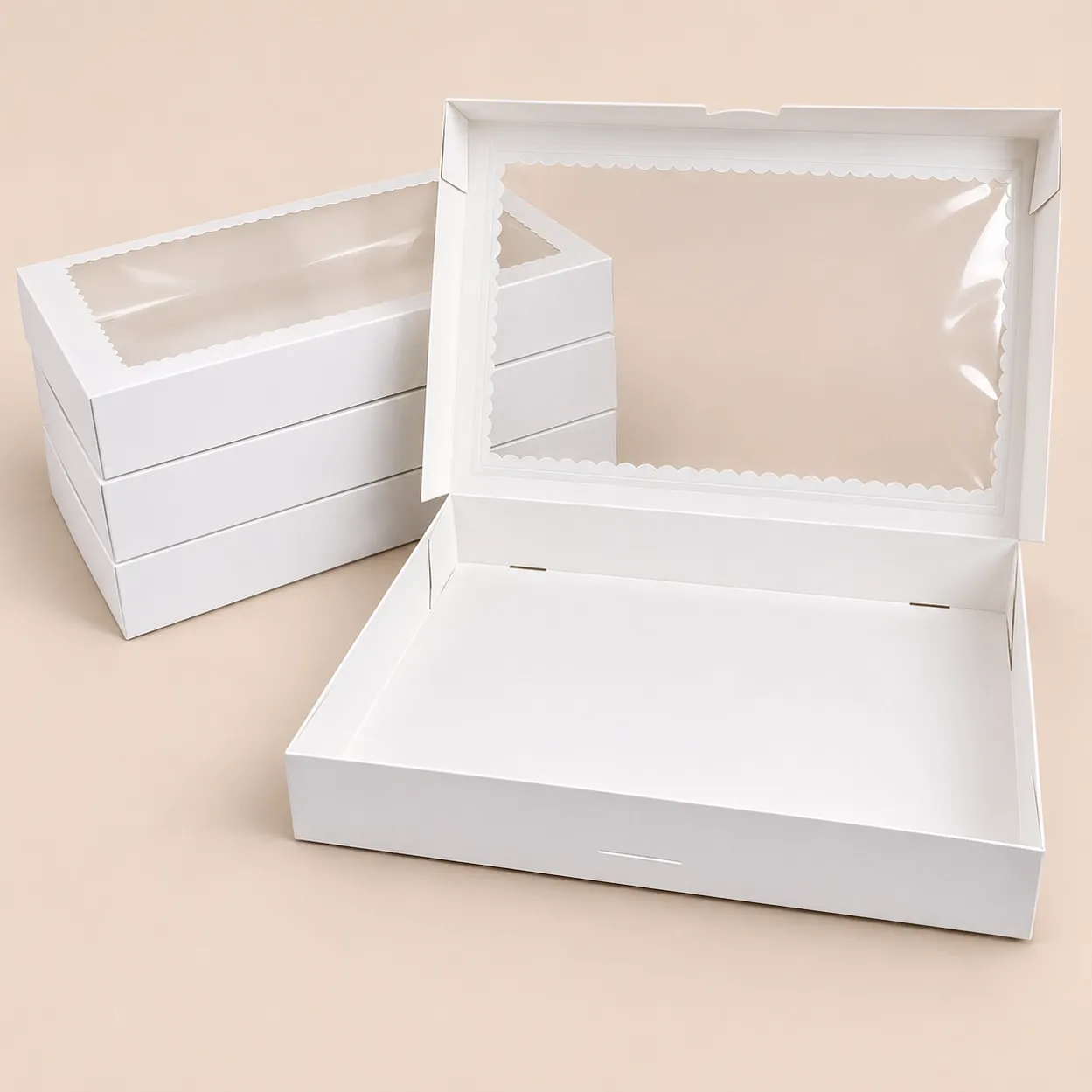
Counter display or customer photos | Cake box with a clear window | Is the cake visible through the window, and does the lid stay firm when you carry the box? |
For heavier cakes, ask your supplier about a reinforced paperboard or corrugated structure. Test it with the cake and board you actually use. An empty box can feel sturdy on the counter and flex once it’s loaded.
3. Decide where custom printing adds value
For everyday orders, a standard folding box with a one-color logo can keep the packaging simple. For a seasonal collection or gift range, a clear window, a printed pattern, or a small foil-stamped logo can make the box feel more considered.
Before choosing a special shape or finish, ask how it affects the minimum order quantity, sample cost, and assembly time. If any part of the packaging will touch the cake directly, tell your supplier where that contact occurs and ask for documentation for the proposed material.
4. Test a sample before placing a bulk order
Pack one of your usual cakes in the sample, including its board and decorations. Then check that:
- The board slides in and comes out without catching on the opening.
- The lid closes without touching the frosting or topper.
- The base stays flat and the tabs or handle hold under the packed weight.
- The logo, color, and finish look as expected on the actual paper.
If you deliver cakes, try the sample on a typical local delivery before approving the bulk order. That gives you a chance to adjust the fit or strengthen the base while the design is still easy to change.
What to send us for a cake box quote
Send YTS Packaging your cake board dimensions, finished cake height, approximate packed weight, and order quantity. If you have a photo of the cake, a logo file, or a delivery postcode, include those too. We can help you compare a standard folding box, a tall box, or a window box for your bakery.